








The internet has a complex structure that allows different devices around the world to communicate with one another instantly. One of the main parts of the internet’s structure is the IP address. An IP address 264.68.111.161 is used by every website, server, and device connected to the internet.
There is one term that has recently become the subject of interest for internet users. Users have been searching for the term “264.68.111.161” to learn if it is related to the internet’s structure or something else.
In this in-depth guide, we will look at 264.68.111.161 in greater detail, examine whether it is a legitimate IP address, and also look at IP addressing in greater depth, as well as IP lookup tools, security issues, and troubleshooting.
At the end of this article, you will have gained a comprehensive understanding of IP addresses and their analysis, particularly 264.68.111.161.
What Is an IP Address?
An IP address (Internet Protocol Address) is a unique identifier assigned to every device connected to the internet. It acts like a digital mailing address, allowing data packets to be routed correctly between devices.
Whenever you:
-
Visit a website
-
Send an email
-
Stream a video
-
Access cloud services
Your device communicates with servers through IP addresses.
Without IP addresses, the internet would not function because devices would have no way to locate each other.
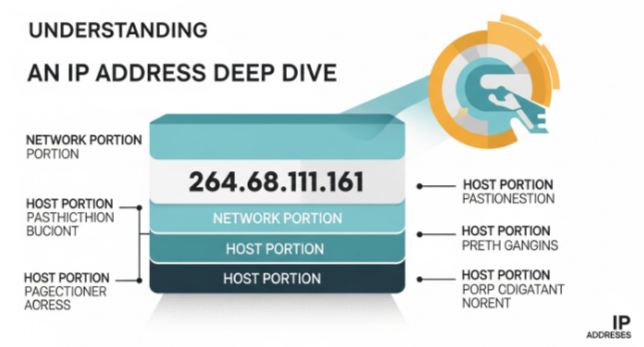
Understanding the Structure of IP Addresses 264.68.111.161
Most commonly used IP addresses follow the IPv4 format, which consists of four numbers separated by dots.
Example format:
Each section is called an octet.
Important rules for IPv4 addresses:
-
Each octet must be between 0 and 255
-
There are four octets
-
Numbers are separated by periods
Example valid IP addresses include:
-
192.168.1.1
-
8.8.8.8
-
172.217.12.206
This structure ensures that billions of unique devices can be addressed across networks.
Is 264.68.111.161 a Valid IP Address?
When analyzing 264.68.111.161, the first step is to check whether it follows IPv4 rules.
As mentioned earlier, each octet must fall within 0–255.
Let’s break down the address:
-
264
-
68
-
111
-
161
The issue is immediately clear.
The number 264 exceeds the maximum limit of 255.
Therefore:
264.68.111.161 is NOT a valid IPv4 address.
This means the address cannot exist on the internet as a standard IPv4 host.
Why Do Invalid IP Addresses Appear Online?
There are several reasons you might encounter something like 264.68.111.161 online.
1. Typographical Errors 264.68.111.161
Sometimes users accidentally type numbers incorrectly when copying IP addresses.
Example:
-
Intended: 204.68.111.161
-
Mistyped: 264.68.111.161
Even a small typo can produce an invalid address.
2. Placeholder Numbers in Documentation
Developers or network engineers sometimes use fake IP numbers as examples when writing tutorials or technical documents.
Invalid IP addresses ensure:
-
They cannot accidentally connect to a real server
-
They avoid exposing real infrastructure
3. Malicious or Obfuscated Data
Cybersecurity analysts sometimes see strange IP patterns in:
-
spam emails
-
suspicious logs
-
malware scripts
Attackers occasionally modify IP numbers slightly to hide real addresses.
4. Automated Data Generation
Bots and automated scripts sometimes generate random numbers that look like IP addresses.
Some of these numbers exceed valid ranges, producing entries like 264.68.111.161.
Difference Between IPv4 and IPv6
While 264.68.111.161 is invalid for IPv4, modern networks also use IPv6.
IPv6 was introduced to solve IPv4 address exhaustion.
IPv4 Format
Example:
Characteristics:
-
32-bit address
-
Four octets
-
Around 4.3 billion addresses
IPv6 Format
Example:
Characteristics:
-
128-bit address
-
Hexadecimal format
-
Nearly unlimited address space
IPv6 ensures that billions of new devices such as smartphones, IoT devices, and servers can connect to the internet.
How IP Address Lookup Works
If you encounter an IP address online, you may want to analyze it using an IP lookup tool.
These tools provide information such as:
-
Geographic location
-
Internet Service Provider (ISP)
-
Hostname
-
Organization
-
Network range
However, if you attempt to search 264.68.111.161, lookup tools will return invalid IP address errors because the number is outside the allowed range.
Common Tools for IP Address Analysis
Several tools help analyze IP addresses and network activity.
1. WHOIS Lookup
WHOIS databases store registration information for IP blocks and domains.
You can use WHOIS to find:
-
Network owners
-
ISP details
-
Administrative contacts
2. Traceroute
Traceroute shows the path data packets travel between your device and a server.
It helps identify:
-
Network bottlenecks
-
Latency problems
-
Routing failures
3. IP Geolocation Tools
These tools estimate where an IP address originates.
They provide:
-
Country
-
City
-
ISP
-
Latitude/longitude estimates
Remember that IP geolocation is not always exact.
Security Implications of Unknown IP Addresses
Even though 264.68.111.161 is invalid, suspicious IP addresses can sometimes indicate cybersecurity threats.
Examples include:
-
DDoS attacks
-
brute-force login attempts
-
spam bots
-
malware communication servers
Organizations monitor network logs to detect unusual IP patterns.
How to Protect Your Network from Suspicious IP Activity
Network administrators use several strategies to protect systems from malicious IP addresses.
Firewall Rules
Firewalls block traffic from suspicious IP addresses or regions.
Intrusion Detection Systems
Security systems monitor network traffic for unusual behavior.
Examples include:
-
repeated login attempts
-
unusual port scanning
Rate Limiting
Rate limiting prevents attackers from overwhelming servers with requests.
IP Blacklists
Some IP addresses become known sources of spam or malware.
These addresses are added to global blacklists used by email servers and firewalls.
Private vs Public IP Addresses
Another important concept when discussing IP numbers is the difference between public and private addresses.
Public IP Address
A public IP is assigned by an internet service provider.
It allows devices to communicate across the global internet.
Private IP Address
Private IPs are used within local networks such as:
-
homes
-
offices
-
schools
Examples include:
-
192.168.1.1
-
10.0.0.1
-
172.16.0.1
Private IP addresses cannot be accessed directly from the internet.
Role of IP Addresses in Website Hosting and 264.68.111.161
Every website you visit relies on IP addressing.
When you type a domain name into your browser, a system called DNS (Domain Name System) converts the domain into an IP address.
Example:
The browser then connects to that IP address to retrieve the webpage.
Without IP addresses, domain names would not function.
Why Some IP Addresses Are Reserved and 264.68.111.161
Certain IP ranges are reserved for special purposes.
Examples include:
Loopback Address
Used by computers to communicate with themselves.
Private Network Ranges
-
10.0.0.0 – 10.255.255.255
-
172.16.0.0 – 172.31.255.255
-
192.168.0.0 – 192.168.255.255
These addresses cannot be routed on the public internet.
Multicast Addresses
Used for broadcasting data to multiple devices simultaneously.
Network Troubleshooting with IP Addresses
Network engineers often analyze IP addresses to diagnose problems.
Common troubleshooting steps include:
-
Checking IP configuration
-
Testing connectivity with ping
-
Running traceroute
-
Reviewing DNS records
-
Monitoring firewall logs
Invalid addresses like 264.68.111.161 would immediately indicate a configuration error.
The Future of Internet Addressing
As the internet continues to grow, IPv6 adoption is increasing.
Major companies such as:
-
Google
-
Cloudflare
-
Microsoft
-
Amazon
already support IPv6 connectivity.
Eventually, IPv6 will replace IPv4 as the dominant internet addressing system.
However, IPv4 will likely remain in use for many years due to legacy systems.
Frequently Asked Questions About 264.68.111.161
Is 264.68.111.161 a real IP address?
No. The number 264 exceeds the IPv4 limit of 255, making the address invalid.
Why do people search for 264.68.111.161?
People may encounter it in logs, tutorials, or mistyped addresses and want to verify whether it is legitimate.
Can an IP address start with 264?
No. IPv4 octets must range from 0 to 255.
Could it belong to IPv6?
No. IPv6 addresses use hexadecimal notation and colon separators rather than decimal numbers.
What should I do if I see this IP in logs?
It may indicate:
-
a configuration error
-
corrupted data
-
a script generating invalid values
Conclusion about 264.68.111.161
The IP address 264.68.111.161 is an interesting example that emphasizes the need to understand the concept of IP addressing. Although it may look similar to other typical IPv4 addresses, it is actually an invalid IP address because one of the parts exceeds the limit of 255.
In this guide, we have learned the basics of IP addresses, their structure, their use in internet communication, their security, and the differences between IPv4 and IPv6 addresses.
Understanding IP addresses is essential for:
-
network administrators
-
cybersecurity professionals
-
developers
-
everyday internet users
As the internet evolves, it will continue to grow in its ability to connect more and more devices with the advent of technology like IPv6.
If you are ever presented with strange numbers like 264.68.111.161, the first step in determining whether it is legitimate or not is to analyze the numbers in the IP address.